



Paintless Dent Repair vs. Traditional Body Repair for Hail Damage: Which Do You Need?
If your vehicle has been damaged by hail, one of the first questions is how those dents should actually be repaired.
For many vehicles, Paintless Dent Repair (PDR) can restore hail-damaged panels while preserving the existing factory paint. Other types of damage may require conventional body repair, refinishing or even panel replacement.
The right repair method depends on the location and severity of the damage, the condition of the paint, the amount of metal stretching and the construction of the affected panel.
At Dentagon, we inspect the damage first and determine the appropriate repair approach for each vehicle rather than assuming every hail dent should be repaired the same way.
LEARN MORE ABOUT HAIL DAMAGE REPAIR
What Is Paintless Dent Repair?
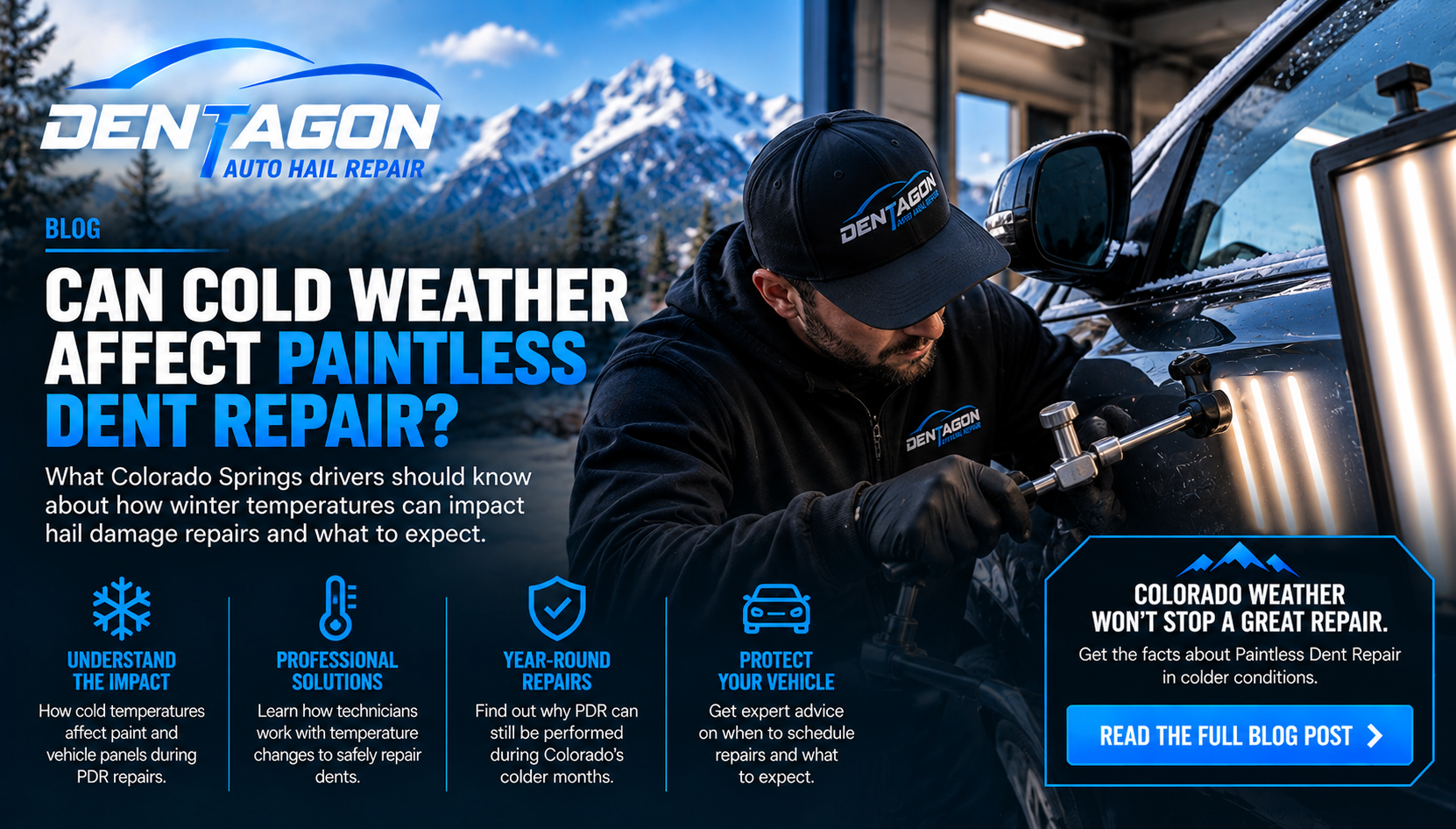
Paintless Dent Repair is a specialized technique used to repair dents without automatically sanding, filling and repainting the damaged panel.
PDR technicians use specialized tools and techniques to carefully manipulate damaged metal back toward its proper shape while preserving the vehicle’s existing paint whenever conditions allow.
For hail damage, this can be particularly valuable because a single storm may leave dozens or even hundreds of dents across several panels.
LEARN MORE ABOUT PAINTLESS DENT REPAIR
How Is Traditional Body Repair Different?
Conventional body repair can involve a combination of procedures depending on the damage.
These may include:
- Sanding the damaged area
- Body filler
- Primer
- Repainting
- Blending adjacent panels
- Repairing or replacing damaged parts
These techniques are necessary when damage cannot appropriately be repaired with PDR.
For example, severely stretched metal, damaged paint or certain types of previous body repair can change which repair methods are suitable.
The goal isn’t to say that one repair method is always better. It’s to use the right method for the actual damage.
When Is PDR a Good Choice for Hail Damage?
Paintless Dent Repair is often appropriate when the hail has dented the metal but the paint surface remains intact.
A technician will consider factors such as:
- Whether the paint is cracked or damaged
- Depth of the dents
- Size of the impacts
- Amount of metal stretching
- Location of the dents
- Whether dents cross body lines
- Accessibility behind the damaged panel
- Previous repairs to the panel
- Panel material
A vehicle can have some panels that are excellent candidates for PDR while other damaged areas require a different approach.
Can Severe Hail Damage Still Be Repaired With PDR?
Sometimes.
A vehicle can look surprisingly damaged and still have substantial areas that are suitable for Paintless Dent Repair.
The number of dents alone doesn’t determine whether PDR will work.
Dent depth, metal stretch, paint condition and dent location can be more important than simply counting impacts.
That’s one reason a professional inspection is important before assuming a badly hail-damaged panel needs to be replaced or repainted.
When Might Traditional Body Repair Be Necessary?
Conventional repair may be appropriate when the damage exceeds what can reasonably be corrected using Paintless Dent Repair.
Examples can include:
- Cracked or chipped paint
- Severe metal stretching
- Extremely sharp or complex impacts
- Certain damaged edges or structural areas
- Previous body filler or refinishing
- Damage that cannot be adequately accessed or repaired using PDR techniques
Every vehicle and every hailstorm is different, which is why Dentagon evaluates the actual damage before recommending a repair approach.
Does PDR Preserve the Factory Paint?
One of the primary benefits of Paintless Dent Repair is its ability to preserve the vehicle’s existing finish when the damage is suitable for PDR.
Traditional body repair may require refinishing a panel. PDR works with the existing metal and paint instead.
For owners who want to retain as much of their vehicle’s factory finish as possible, this is one of the biggest advantages of PDR.
Can PDR Repair Dents on Body Lines?
Many dents located on body lines can be repaired with PDR, but they can be more technically challenging.
Body lines are the defined contours and creases designed into vehicle panels. Because the metal already has a specific shape and tension in these areas, restoring a hail impact along a body line can require additional precision.
The technician needs to evaluate the severity and exact location of the dent before determining whether PDR is appropriate.
Can Aluminum Panels Be Repaired With PDR?
Many modern vehicles use aluminum for hoods, liftgates and other body panels.
Aluminum behaves differently from steel, but that doesn’t automatically mean a hail-damaged aluminum panel needs to be replaced.
Many aluminum dents can be repaired using PDR when the damage and paint condition are suitable.
Working with aluminum requires specialized techniques, making technician experience especially important.
Is PDR Faster Than Traditional Body Repair?
PDR can eliminate several procedures associated with conventional repair, such as body filler, primer and repainting.
However, the actual repair time for hail damage depends heavily on the vehicle.
A car with a handful of dents is very different from a vehicle with extensive hail damage across the hood, roof, doors, fenders and quarter panels.
Parts access, trim removal, insurance procedures and the overall severity of the damage can also affect repair time.
Rather than assuming a specific turnaround time, Dentagon can provide a better understanding of the repair process after inspecting the vehicle.
Is Paintless Dent Repair Less Expensive?
It can be, but there isn’t a universal answer.
The cost of hail repair depends on the extent of the damage and the procedures required to properly repair the vehicle.
PDR may avoid some of the materials and refinishing procedures associated with traditional body repair, but extensive hail damage can still require significant technician time and expertise.
If you’re trying to determine what your hail damage may cost, the most accurate starting point is a professional inspection.
Does Insurance Cover Paintless Dent Repair?
Hail damage is generally associated with comprehensive auto insurance coverage, subject to the terms, deductible and limitations of the individual policy.
If you have a covered hail claim, your insurance company may prepare an initial estimate describing the repair procedures it has identified.
Once Dentagon performs a detailed inspection, additional covered damage or necessary repair procedures may sometimes be identified.
When appropriate, our team can provide repair-related documentation and supplemental information to the insurance company for review.
LEARN ABOUT INSURANCE CLAIMS ASSISTANCE
What If My Insurance Estimate Recommends a Different Repair Method?
An insurance estimate is an important part of the claim process, but the vehicle still needs to be evaluated based on its actual condition.
If Dentagon identifies repair procedures or covered damage that weren’t included in the initial estimate, we can document those items and communicate the repair-related information to the insurance company for review.
Dentagon doesn’t determine your insurance coverage or policy benefits. Those decisions remain with your insurance carrier.
Can Dentagon Help With My Deductible?
Dentagon offers up to $500 in Deductible Assistance on qualifying auto hail repairs.
Eligibility requirements and limitations apply, so we’ll review the available options with you based on your repair.
LEARN ABOUT DEDUCTIBLE ASSISTANCE
What If I Need Transportation During the Repair?
If your vehicle needs to remain with Dentagon during the repair process, Loaner Car Assistance may be available for qualifying hail repairs.
We’ll explain eligibility and available transportation options when your repair is being scheduled.
LEARN ABOUT LOANER CAR ASSISTANCE
How Do I Know Which Repair Method My Vehicle Needs?
You don’t need to figure that out yourself.
A professional hail damage inspection allows a technician to evaluate the affected panels, paint condition and severity of the dents and determine whether PDR is appropriate.
Some vehicles may be excellent candidates for Paintless Dent Repair. Others may require a combination of repair techniques.
The important part is having the actual vehicle inspected before deciding how it should be repaired.
Get a Free Hail Damage Inspection in Colorado Springs
If your vehicle has hail damage, bring it to Dentagon for a free professional inspection.
We’ll evaluate the affected panels, determine whether Paintless Dent Repair is appropriate and explain the recommended repair process.
If insurance is involved, we can also help with the repair-related documentation and communication needed to move the repair forward.
SCHEDULE YOUR FREE HAIL DAMAGE INSPECTION