


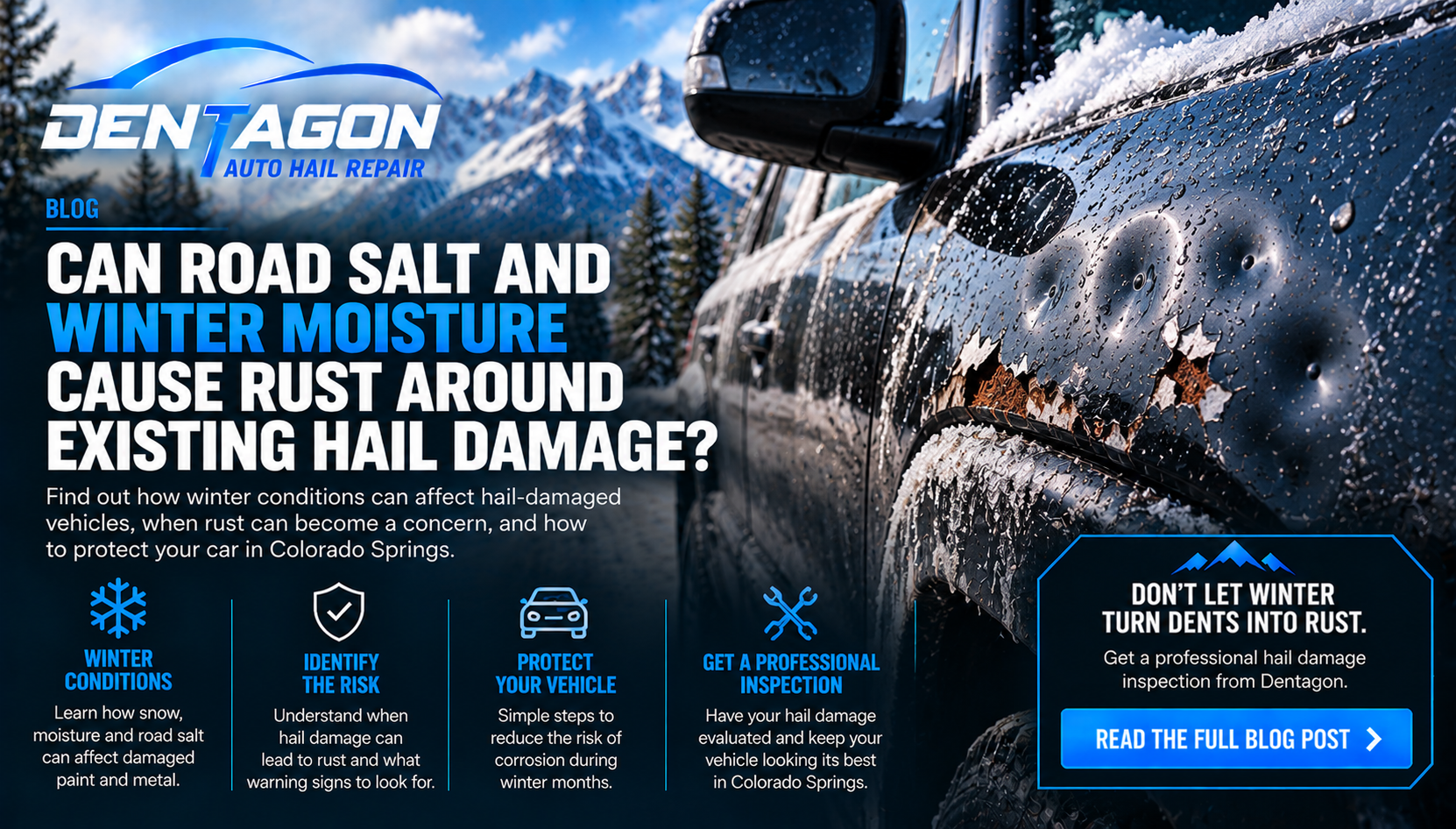
Can Road Salt and Winter Moisture Cause Rust Around Existing Hail Damage?
Colorado Springs winters can be rough on vehicles. Freezing temperatures, melting snow, road treatments, and constant temperature swings create conditions that test even well-maintained automotive finishes.
But what if your vehicle is already covered in hail dents from a summer storm?
As winter approaches, many drivers wonder whether existing hail damage could turn into something more serious. Can moisture collect inside hail dents? Does road salt cause damaged panels to rust? And will those small dents eventually become expensive repairs?
Here’s the important distinction: Hail dents don’t automatically cause rust. But when a hail impact damages the protective paint finish, winter moisture and road contaminants can increase the risk of corrosion.
Understanding the difference can help you protect your vehicle and determine when professional hail damage repair is necessary.
At Dentagon Auto Hail Repair in Colorado Springs, we specialize in evaluating automotive hail damage and restoring qualifying dents through Paintless Dent Repair (PDR).
Can Hail Damage Cause Rust on Your Car?
Yes, hail damage can contribute to rust when an impact compromises the protective coating on a steel body panel.
However, not every hail dent creates this risk.
Modern vehicles have multiple protective layers designed to shield the underlying metal from environmental exposure. These typically include primers, color coatings, and a clear coat, although the exact construction varies by manufacturer.
When a hailstone strikes a vehicle, it may create a dent without breaking those protective layers.
In that situation, the damage is often cosmetic.
But a sufficiently severe impact can crack, chip, or fracture the finish. If the damage exposes susceptible metal, moisture and oxygen can initiate corrosion.
Road salt and other contaminants may accelerate that process.
The key factor isn’t simply whether your vehicle has a dent. It’s whether the protective finish remains intact.
Why Winter Conditions Increase the Risk of Corrosion
Colorado Springs drivers experience everything from dry, sunny afternoons to freezing nights and sudden snowstorms.
Those changing conditions can create repeated cycles of moisture exposure.
When protective coatings are compromised, several winter-related factors can contribute to corrosion.
1. Melting Snow Introduces Moisture
Snow that accumulates on a vehicle eventually melts.
Water can reach damaged paint, exposed panel edges, and other vulnerable areas.
If the protective coating is intact, the underlying metal generally remains protected.
However, when bare steel is exposed, repeated moisture exposure can contribute to rust formation.
2. Road Salt Can Accelerate Corrosion
Salt-based road treatments help manage icy driving conditions, but chloride-containing residue can also accelerate corrosion on exposed metal.
As vehicles travel through slush and wet roadways, contaminated moisture can splash onto body panels and collect around vulnerable areas.
Salt doesn’t automatically cause a painted hail dent to rust.
The concern arises when the protective coating has already been compromised.
3. Freeze-Thaw Cycles Can Stress Existing Paint Damage
Colorado Springs frequently experiences temperatures above freezing during the day followed by freezing conditions overnight.
If moisture enters an existing crack or damaged coating, repeated temperature changes may contribute to further deterioration.
The extent of that deterioration depends on the condition of the coating, the location of the damage, and other environmental factors.
A small chip that exposes metal deserves more attention than a shallow dent with undamaged factory paint.
4. Winter Grime Can Hide Early Warning Signs
Road dirt, salt residue, snow, and ice can make small areas of paint damage difficult to notice.
A driver may see a dent but overlook a tiny chip near its center.
By the time the vehicle is thoroughly washed in spring, corrosion may already be visible around the damaged area.
Regular cleaning and inspections can help identify problems earlier.
Do Hail Dents Collect Water and Cause Rust?
This is a common misconception.
A shallow hail dent may temporarily hold rainwater or melting snow, depending on its shape and location.
However, water sitting on an intact, properly protected paint surface does not automatically cause the underlying metal to rust.
Automotive finishes are designed to tolerate normal environmental exposure.
The concern is damaged or deteriorating paint.
If a dent contains a crack, chip, or exposed metal, moisture can reach areas that are no longer adequately protected.
That distinction matters because many vehicles have extensive hail damage without experiencing corrosion.
The presence of dents alone doesn’t mean rust is inevitable.
How Can You Tell If Hail Damage Has Broken the Paint?
Some paint damage is obvious.
Other defects can be extremely difficult to identify without proper lighting.
Watch for the following warning signs.
Small Chips in the Center of a Dent
A direct hail impact may leave a small chip or damaged spot where the hailstone struck the panel.
Look for areas where the surface appears rough, discolored, or different from the surrounding paint.
Fine Cracks Around an Impact
Severe impacts can sometimes cause cracking in the paint system.
These cracks may be difficult to see in ordinary daylight.
A professional inspection can help identify whether the finish has been compromised.
Discoloration or Rust-Colored Spots
Orange-brown discoloration can indicate corrosion on exposed steel.
However, not every rust-colored mark is corrosion of the vehicle’s body panel. Surface contamination, including embedded iron particles, can sometimes produce similar staining.
A proper evaluation is necessary to determine the cause.
Peeling or Lifting Paint
Paint that is separating from the underlying surface may allow moisture to reach areas that should remain protected.
Peeling or lifting paint requires attention regardless of whether the original damage came from hail.
Damage Along Panel Edges
Panel edges, seams, and complex body lines can be more difficult to inspect and repair.
If a hail impact occurs near an already vulnerable area, the condition of the coating becomes especially important.
Can Paintless Dent Repair Prevent Rust?
Paintless Dent Repair can help restore qualifying hail-damaged panels while preserving the existing factory paint finish.
That is one of the major advantages of PDR.
Instead of sanding the panel, applying body filler, and repainting, technicians use specialized tools to gradually reshape the damaged metal.
When the original paint remains intact and the dent is suitable for PDR, this approach can restore the panel without disturbing its protective finish.
However, PDR does not repair cracked paint, remove existing corrosion, or restore missing protective coatings.
If a hail impact has already damaged the paint, additional repair work may be necessary.
This is why professional inspection matters.
The appropriate repair depends on both the shape of the dent and the condition of the surrounding finish.
What Happens If Rust Has Already Started?
If corrosion has developed around an impact, the repair process may involve more than removing the dent.
The affected area must be evaluated to determine how much of the coating and underlying material has been compromised.
Depending on the severity, appropriate repairs may include corrosion removal, surface preparation, refinishing, or replacement of a damaged component.
Paintless Dent Repair alone is not designed to correct corrosion.
Attempting to reshape a panel with compromised paint can also create additional concerns.
For that reason, an experienced technician should assess the damage before recommending PDR.
Early evaluation can help identify whether the problem is limited to surface coating damage or requires more extensive repair.
Are Aluminum Body Panels Safe From Winter Corrosion?
Many modern vehicles use aluminum for hoods, doors, fenders, and other exterior components.
Unlike steel, aluminum does not develop the familiar reddish-brown iron oxide commonly called rust.
However, aluminum can still corrode.
When its protective finish is compromised, aluminum may develop oxidation or other forms of corrosion depending on environmental conditions.
Road salts and certain contaminants can contribute to aluminum corrosion, particularly where coatings are damaged or dissimilar metals are present.
Therefore, drivers shouldn’t assume that aluminum panels are completely immune to winter-related deterioration.
Paintless Dent Repair can often be performed on qualifying aluminum panels, but the material requires specialized techniques.
The technician must evaluate both the dent and the condition of the finish.
Can You Wait Until Spring to Repair Hail Damage?
Sometimes, yes.
If your vehicle has shallow hail dents and the factory paint remains intact, waiting until spring does not automatically mean the dents will worsen.
Cold temperatures alone generally don’t cause cosmetic hail dents to spread or turn into rust.
However, postponing an inspection may not be the best decision when:
- The paint is chipped, cracked, or peeling.
- You notice possible corrosion around an impact.
- The vehicle has extensive damage that hasn’t been documented.
- You are planning to sell or trade in the vehicle.
- You have an unresolved insurance claim.
- Additional winter damage could complicate the assessment.
The important decision isn’t necessarily whether every dent must be repaired immediately.
It’s whether the damage should be evaluated before another season of exposure.
Does Auto Insurance Cover Rust Caused by Hail Damage?
Comprehensive auto insurance commonly covers qualifying hail damage, subject to the policy’s terms and deductible.
However, coverage for corrosion that develops after the original event can be more complicated.
Insurers may consider the cause of the damage, when it occurred, whether it resulted directly from a covered event, and whether exclusions or policy conditions apply.
Some policies exclude or limit coverage for gradual deterioration, wear, or corrosion.
That means you shouldn’t assume rust discovered months after a hailstorm will automatically be covered.
If you notice hail damage that has compromised the paint, document the condition and contact your insurer to understand the applicable requirements.
A professional hail damage inspection can help establish the vehicle’s current condition and identify the repair work that may be needed.
Dentagon can assist with the repair-related aspects of the insurance claims process, but coverage decisions remain with your insurance company.
How to Protect a Hail-Damaged Vehicle During a Colorado Winter
If your vehicle still has unrepaired hail damage, there are practical steps you can take to reduce unnecessary exposure and identify potential problems.
Wash Your Vehicle Regularly
Remove road salt, dirt, and winter grime according to the vehicle manufacturer’s care recommendations.
Pay attention to areas where contaminants may accumulate.
Avoid aggressive cleaning methods that could damage already compromised paint.
Inspect Existing Hail Dents
Look for changes in paint condition, particularly chips, cracks, peeling, or discoloration.
A clean vehicle under good lighting is easier to inspect.
Avoid Scraping Painted Surfaces
When removing snow or ice, use tools designed for automotive finishes and avoid dragging abrasive materials across the paint.
Scratches can create additional coating damage unrelated to the original hail dents.
Address Exposed Metal Promptly
If a hail impact has chipped the paint and exposed metal, have the area evaluated.
Appropriate protective treatment may help limit further exposure until permanent repairs can be completed.
Keep Insurance Documentation Organized
Preserve photographs, previous estimates, claim records, and storm information.
If additional damage occurs, these records may help distinguish existing damage from a new incident.
Schedule a Professional Hail Damage Inspection
A qualified technician can examine the damaged panels, evaluate paint condition, and determine whether Paintless Dent Repair is suitable.
An inspection can also reveal dents that are difficult to see in ordinary daylight.
Why Professional Hail Damage Repair Matters in Colorado Springs
Colorado Springs weather creates unique challenges for vehicle owners.
A car can experience damaging summer hail, freezing fall mornings, winter snow, and road treatment exposure within the same year.
Understanding the condition of your vehicle’s finish is essential when deciding how to address existing hail damage.
At Dentagon Auto Hail Repair, we specialize in Paintless Dent Repair for qualifying automotive hail damage.
Our team evaluates damaged panels, explains available repair options, and helps vehicle owners navigate the repair-related steps of the insurance claims process.
When paint damage or corrosion is present, determining whether PDR remains appropriate is an important part of that evaluation.
The goal is to recommend a repair approach that fits the actual condition of the vehicle rather than assuming every hail dent requires the same solution.
Don’t Let Damaged Paint Go Unchecked This Winter
Not every hail dent is a corrosion risk.
But when a hail impact compromises the protective finish, winter moisture and road contaminants can create additional concerns.
The sooner you understand the condition of your vehicle, the easier it is to make an informed repair decision.
If your vehicle still has hail damage from a previous Colorado Springs storm, don’t wait until visible rust appears to find out whether the paint has been compromised.
Schedule Your Hail Damage Inspection With Dentagon
Protect your vehicle’s appearance and understand your repair options before winter conditions take their toll.
Contact Dentagon Auto Hail Repair in Colorado Springs to schedule a professional hail damage inspection.
Our team will evaluate the damage, explain whether Paintless Dent Repair is appropriate, and help you take the next step toward restoring your vehicle.
SCHEDULE YOUR FREE HAIL DAMAGE INSPECTION