


Can Cold Weather Affect Paintless Dent Repair? What Colorado Springs Drivers Should Know
Colorado Springs drivers know how quickly the weather can change. One day, you’re enjoying sunny skies and mild temperatures. The next, you’re scraping frost from your windshield and preparing for an early-season snowstorm.
But what happens when your vehicle still has hail damage from summer?
As temperatures drop across the Front Range, many vehicle owners wonder whether they’ve missed their opportunity to have those dents repaired. Can Paintless Dent Repair still be performed when it’s freezing outside? Does cold weather make metal harder to repair? And should you wait until spring before scheduling an appointment?
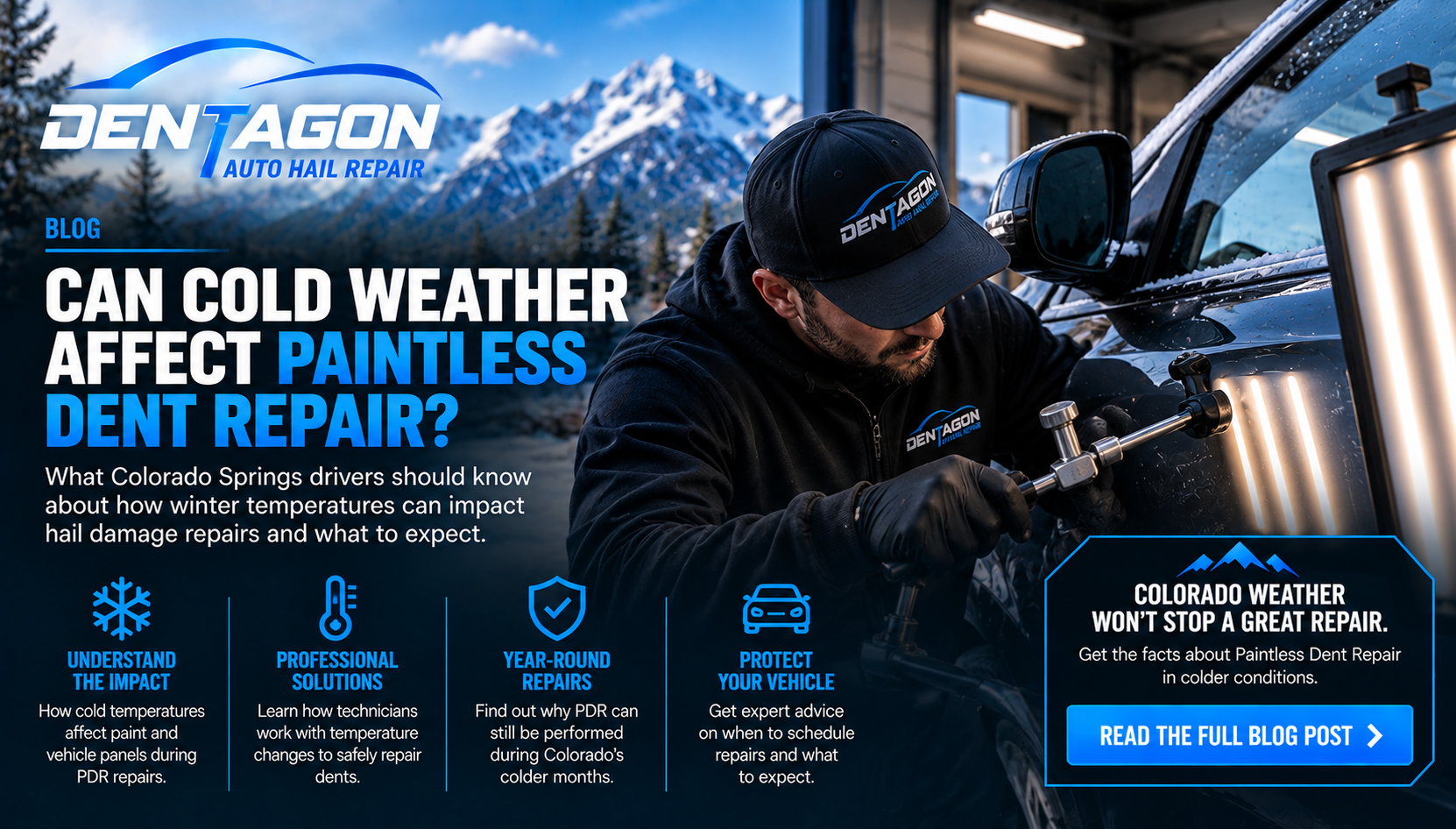
The good news is that Paintless Dent Repair (PDR) can be performed throughout the year, including during Colorado’s colder months. However, temperature can influence how technicians approach the repair process.
At Dentagon Auto Hail Repair in Colorado Springs, understanding how vehicle panels respond to different conditions is part of delivering professional hail damage repairs.
Does Cold Weather Affect Paintless Dent Repair?
Yes, cold temperatures can affect certain aspects of the Paintless Dent Repair process, but they don’t necessarily prevent a vehicle from being repaired.
PDR is a specialized technique used to remove qualifying dents from vehicle body panels without traditional body filler or repainting. Technicians use precision tools and controlled pressure to gradually reshape damaged metal while preserving the vehicle’s existing paint finish.
Temperature matters because automotive paint systems and metal panels respond differently to changing conditions.
When temperatures fall, automotive paint coatings generally become less flexible. Although the metal itself can still be manipulated, technicians must account for the condition of the paint and the surrounding panel.
Professional PDR technicians may use controlled heating to help maintain appropriate panel temperatures during repairs.
The objective isn’t simply to remove the dent. It’s to restore the panel while minimizing the risk of damaging the original finish.
Why Cold Temperatures Matter During Hail Damage Repair
Colorado Springs experiences significant temperature fluctuations throughout fall and winter. Even on a sunny afternoon, vehicles can be exposed to freezing overnight conditions.
These changes can influence several parts of the repair process.
1. Automotive Paint Becomes Less Flexible
Modern automotive finishes are designed to withstand changing weather conditions, but temperature still affects their flexibility.
During PDR, the paint must tolerate small amounts of movement as the underlying metal is reshaped.
At lower temperatures, the coating may be less forgiving, particularly on older vehicles, previously repainted panels, or areas where the finish has already been compromised.
A trained technician evaluates these conditions before beginning repairs and may carefully warm the panel when appropriate.
2. Metal Panels Respond Differently to Temperature
Vehicle body panels are commonly manufactured from steel or aluminum.
Both materials expand and contract with temperature changes, although their responses differ.
Cold temperatures can influence how a panel responds to repair pressure. However, the practical challenges depend on the panel material, dent location, damage severity, and the tools and techniques being used.
This is why professional Paintless Dent Repair requires more than simply pushing a dent outward.
3. Controlled Working Conditions Become More Important
Repairing hail damage outdoors during freezing temperatures can introduce unnecessary complications.
Indoor repair environments allow technicians to better manage panel temperatures, lighting, cleanliness, and access to damaged areas.
Proper lighting is especially important because many hail dents are difficult to see without specialized reflection systems.
A controlled environment helps technicians inspect and repair the damage consistently, regardless of the weather outside.
Can Paintless Dent Repair Be Done During Winter in Colorado Springs?
Absolutely. Winter does not automatically prevent Paintless Dent Repair.
Qualified technicians can perform PDR during cold weather when the vehicle, paint condition, and damage are suitable for the process.
Depending on the repair, technicians may allow the vehicle to reach an appropriate temperature inside the shop before beginning work.
They may also use specialized lighting, precision tools, and carefully controlled heat to address individual dents.
The important distinction is that professional PDR is performed according to the condition of the vehicle—not simply the temperature shown on a weather app.
Whether it’s October, December, or February, the right repair approach depends on the specific damage.
Should You Wait Until Spring to Repair Hail Damage?
It’s a common assumption that hail damage should be repaired during warm weather.
However, there is generally no technical reason to postpone qualifying Paintless Dent Repair simply because winter is approaching.
In fact, waiting may create additional complications depending on your circumstances.
Your Vehicle Could Experience Additional Damage
Colorado Springs vehicles are exposed to snow, ice, wind, road debris, and occasional severe weather throughout the year.
If your vehicle already has hail damage, a new incident could make it more difficult to distinguish existing dents from newly damaged areas.
Documenting and inspecting the original damage helps establish its condition before another event occurs.
Insurance Documentation Can Become More Complicated
If you’re planning to file an insurance claim for hail damage, waiting can introduce questions about when the damage occurred.
Insurance policies contain different reporting requirements, coverage terms, and claim conditions.
Having the damage professionally inspected and documented can help you understand the extent of the damage and prepare for conversations with your insurance company.
Existing Paint Damage Deserves Attention
Most shallow hail dents with intact factory paint are primarily cosmetic.
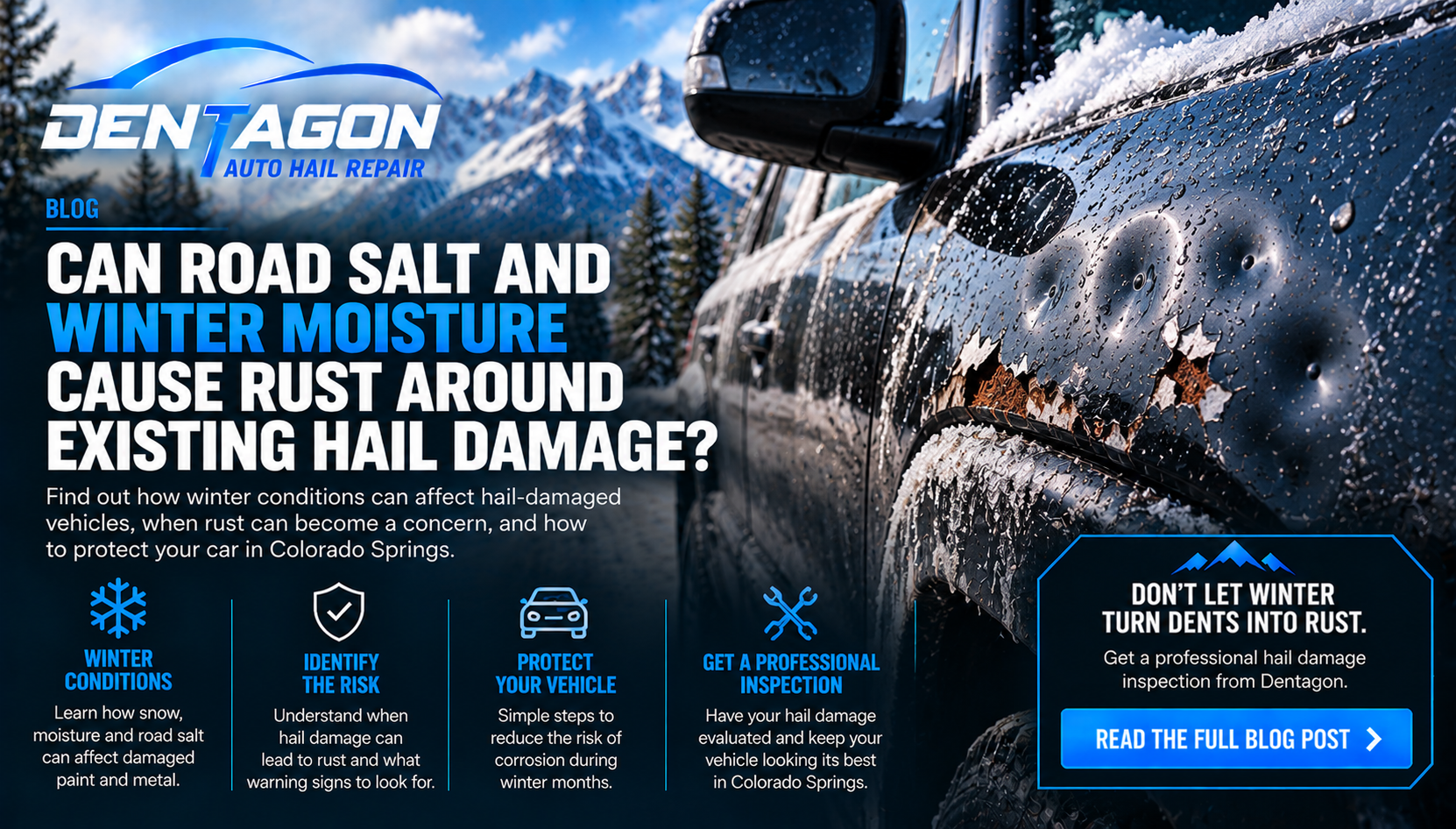
However, hail impacts that chip, crack, or otherwise compromise the paint can expose underlying surfaces to moisture and corrosion.
Winter road conditions can make that exposure more concerning.
If you notice broken paint around an impact, don’t assume it’s simply another cosmetic dent.
A professional inspection can help determine whether PDR is appropriate or whether additional refinishing work is needed.
Does Heating a Vehicle Panel Damage the Paint?
Not when appropriate heating methods are used correctly within safe limits.
Controlled heat is a recognized technique in Paintless Dent Repair, particularly when working with certain dents, materials, or paint conditions.
However, excessive or improperly applied heat can damage automotive finishes.
Professional technicians consider the type of paint, panel material, prior repairs, and other factors before applying heat.
This is one reason homeowners should avoid attempting to remove hail dents with household heat guns, hair dryers, boiling water, or other improvised methods.
DIY techniques can lead to paint damage, distorted panels, or dents that become more difficult to repair professionally.
The safest approach is to have hail damage evaluated by a qualified PDR technician.
Are Aluminum Panels More Difficult to Repair in Cold Weather?
Many modern vehicles use aluminum body panels to reduce weight and improve efficiency.
Aluminum behaves differently from steel during dent repair and often requires specialized tools and techniques.
The material’s properties, panel construction, dent depth, and access points all influence repair complexity.
Cold weather can add another consideration, but it doesn’t automatically make aluminum panels unsuitable for PDR.
An experienced technician will evaluate whether the affected panel can be repaired without compromising its finish.
For Colorado Springs drivers with aluminum hoods, doors, or other body panels, a professional inspection is the best way to determine the appropriate repair method.
How Do You Know If Your Hail Damage Qualifies for PDR?
Not every hail dent is a good candidate for Paintless Dent Repair.
PDR is generally most effective when the paint remains intact and the metal can be reshaped without requiring conventional refinishing.
Factors that influence repairability include:
- Dent depth: Shallow, rounded dents are often easier to repair than sharp, deeply stretched damage.
- Paint condition: Cracked, chipped, or peeling paint may require additional repair methods.
- Panel location: Dents near reinforced areas, edges, and complex body lines can be more challenging.
- Panel material: Steel and aluminum require different techniques.
- Previous repairs: Body filler or nonfactory paint may affect the suitability of PDR.
- Accessibility: Technicians must determine whether specialized tools can safely reach the damaged area.
Hail damage that appears minor in ordinary daylight can also be more extensive than expected.
Professional inspection lighting helps reveal subtle dents across the hood, roof, trunk, and other affected panels.
What Should Colorado Springs Drivers Do Before Winter?
If your vehicle sustained hail damage earlier in the year, fall is an excellent time to have it evaluated.
Start by examining your vehicle in bright, indirect lighting. Look for dents on horizontal surfaces such as the hood, roof, and trunk.
Pay attention to any areas where the paint appears cracked or chipped.
Take photographs of visible damage and preserve any information you have about the storm.
If an insurance claim is involved, review your policy and contact your insurer regarding applicable reporting requirements.
Finally, schedule a professional hail damage inspection rather than assuming repairs must wait until warmer weather.
An inspection can help clarify the extent of the damage, the available repair methods, and the next steps.
Professional Paintless Dent Repair in Colorado Springs, CO
Cold weather doesn’t mean your vehicle has to spend another season covered in hail dents.
At Dentagon Auto Hail Repair, we specialize in restoring hail-damaged vehicles using Paintless Dent Repair techniques designed to preserve qualifying factory finishes.
Our team understands the challenges Colorado Springs drivers face, from sudden summer hailstorms to freezing fall mornings and unpredictable winter conditions.
Whether your vehicle was damaged during a recent storm or you’ve been putting off repairs since summer, we’re here to help you understand your options.
We can also assist you with navigating the insurance claims process and understanding available deductible assistance options.
Don’t let the calendar determine when you take care of your vehicle.
Schedule Your Hail Damage Inspection Today
If you’re wondering whether your vehicle’s hail damage can be repaired during colder weather, let Dentagon take a closer look.
Schedule your inspection with Dentagon Auto Hail Repair in Colorado Springs and find out whether Paintless Dent Repair is the right solution for your vehicle.
SCHEDULE YOUR FREE HAIL DAMAGE INSPECTION